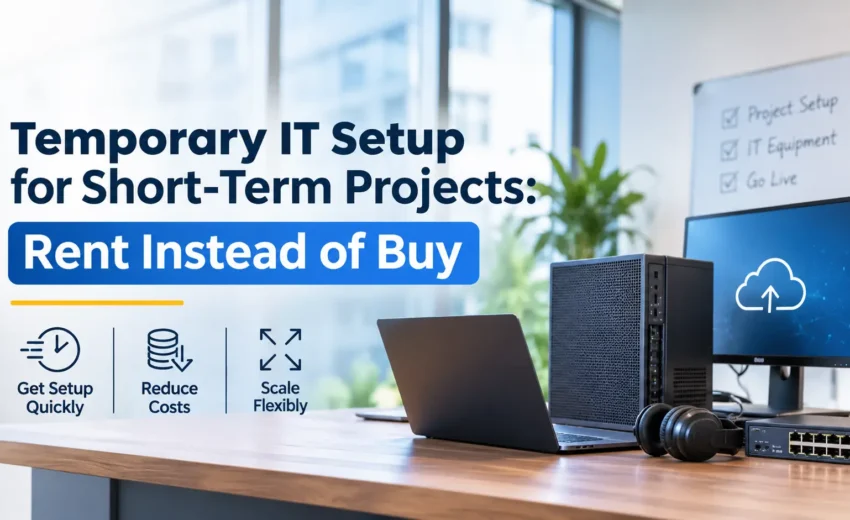
Short-term projects can create temporary IT needs, such as computers for a client assignment, servers for software testing, or equipment for a temporary office. Buying everything can tie up money in hardware that goes unused after the project ends.
Renting meets business needs without high upfront costs. Businesses use equipment for a set period, then return it, ideal for projects, training, office moves, or temporary workload increases.
Businesses looking for IT services hardware in Mumbai can assess their project requirements before deciding which devices to rent. The aim is to get equipment that supports the work, fits the budget and is available for the required period.
Why rent IT equipment for a short-term project?
Buy equipment for regular, multiyear needs; rent for short projects to avoid owning unneeded devices.
Here are some common reasons businesses choose rental equipment:
- Lower upfront spending: Renting avoids the full purchase cost at the start of a project.
- Flexible rental periods: Businesses can arrange equipment for a specific duration, subject to the provider’s terms.
- Faster team expansion: Extra devices help new or temporary employees get started quickly.
- Access to suitable configurations: Companies can choose hardware based on the applications and workload involved.
- Less unused equipment: Devices can be returned after the project, rather than stored indefinitely.
A company needing 25 computers for a three-month training programme may find buying them hard to justify if they won’t be needed afterward. Renting provides them for the programme’s duration.
The financial benefit depends on rental price, duration, deposit, delivery, and support. Businesses should compare total rental and purchase costs before deciding.
What equipment might a short-term project need?
The right setup depends on the work being done, the number of people involved and the software they need. A project team handling office tasks will have different requirements to those of a team testing an application or managing a temporary development environment.
1. Laptops for temporary teams
Laptops are useful when employees need to move between offices, work remotely or attend client meetings. They can also help businesses equip new hires without waiting for a long-term procurement cycle.
Companies arranging rental laptops in Mumbai should check the processor, RAM, storage, battery condition and operating system. The configuration should support the applications employees use every day.
Before booking, confirm included chargers, bags, accessories, and software setup. For confidential information, agree on device access, password management, and data removal upon return.
2. Desktops for fixed workstations
Desktops can suit temporary offices, training rooms, data-entry teams and projects where employees work from the same location. They are a practical option when portability is not a priority.
Before deciding to rent IT equipment in Mumbai, work out how many workstations are required and whether monitors, keyboards, mice and installation support are part of the rental package. This helps the team prepare the workspace before the equipment arrives.
3. Servers for development and testing
Some projects need server capacity to run applications, test software, host internal tools or create a temporary development environment. Renting a server gives you access to the required computing resources without buying hardware for a short assignment.
When considering server rental in Mumbai, confirm the processor, memory, storage, operating system requirements and expected workload.
Server requirements can vary widely. A test environment may need a different configuration than a system handling live business data, so base specifications on the actual project.
How can you plan a temporary IT setup?
A little planning can prevent delays, unnecessary costs and compatibility problems. Before placing an order, work through these steps.
- Estimate the number of users. Count employees, contractors, and others who need access to a device.
- List the required applications. Check software requirements before selecting hardware.
- Set the rental period. Include time for installation, testing and project handover.
- Check the work location. Confirm power points, internet access, desk space and network requirements.
- Plan technical support. Decide who will report issues and how the provider will handle equipment failures.
- Prepare for returns. Assign responsibility for data backups, account removal and equipment collection.
Businesses looking for IT support hardware in Mumbai should clarify what assistance is included with the equipment. Ask whether the provider offers installation, troubleshooting or replacement support, and check the response process before the project starts.
What should you check when choosing a rental provider?
Price matters, but the cheapest quote may fall short if equipment arrives late or fails project requirements. Providers should explain specifications, rental terms, and support.
When comparing an IT equipment rental company in Mumbai, consider these points:
- Equipment availability: Can the provider supply the required number and type of devices on time?
- Clear pricing: Does the quote include delivery, installation, accessories, taxes and deposits?
- Technical assistance: Is there a clear process for reporting hardware problems?
- Replacement terms: What happens if a rented device stops working?
- Data protection: Can the business securely remove its data before returning the equipment?
- Collection arrangements: Are return dates and collection responsibilities clearly defined?
For larger projects, request a written equipment list with the specifications and quantities. This makes it easier to check deliveries and confirm that every team member has the right setup.
A business that needs IT services hardware in Mumbai should also consider whether the provider can accommodate changing requirements. Additional employees, project extensions or new software needs can affect the equipment required during the rental period.
When is renting better than buying?
Renting makes sense when you need equipment for a limited period, the number of users may change, or a project requires hardware the business doesn’t normally maintain.
For instance, a company setting up a temporary office may need laptops and desktops for several months. A software team may require a dedicated testing environment, making server rental in Mumbai a suitable option to evaluate.
However, buying can be more cost-effective when equipment will be used continuously over a long period. Businesses should compare the purchase price, maintenance costs, expected lifespan and resale value against the full rental cost.
The decision should reflect the project timeline and the equipment’s likely use after the work ends.
Arrange the right equipment for your next project
A temporary IT setup should meet the project’s requirements without creating unnecessary long-term expenses. By estimating user needs, checking specifications and confirming support terms, businesses can make a more informed rental decision.
BK Infotech can be considered by businesses evaluating temporary hardware requirements. Whether a team needs rental laptops in Mumbai, fixed workstations or wants to rent IT equipment in Mumbai for a defined period, it is important to discuss the required specifications, quantity and duration before requesting a quote.
Contact BK Infotech to discuss your project requirements and find a suitable equipment rental arrangement.